This compendium is limited to Forst (Lausitz), Scheuno/Brożek, Döbern and places within roughly 20 km. It distinguishes documents, registers, testimony and research hypotheses.
Scale and differing groups
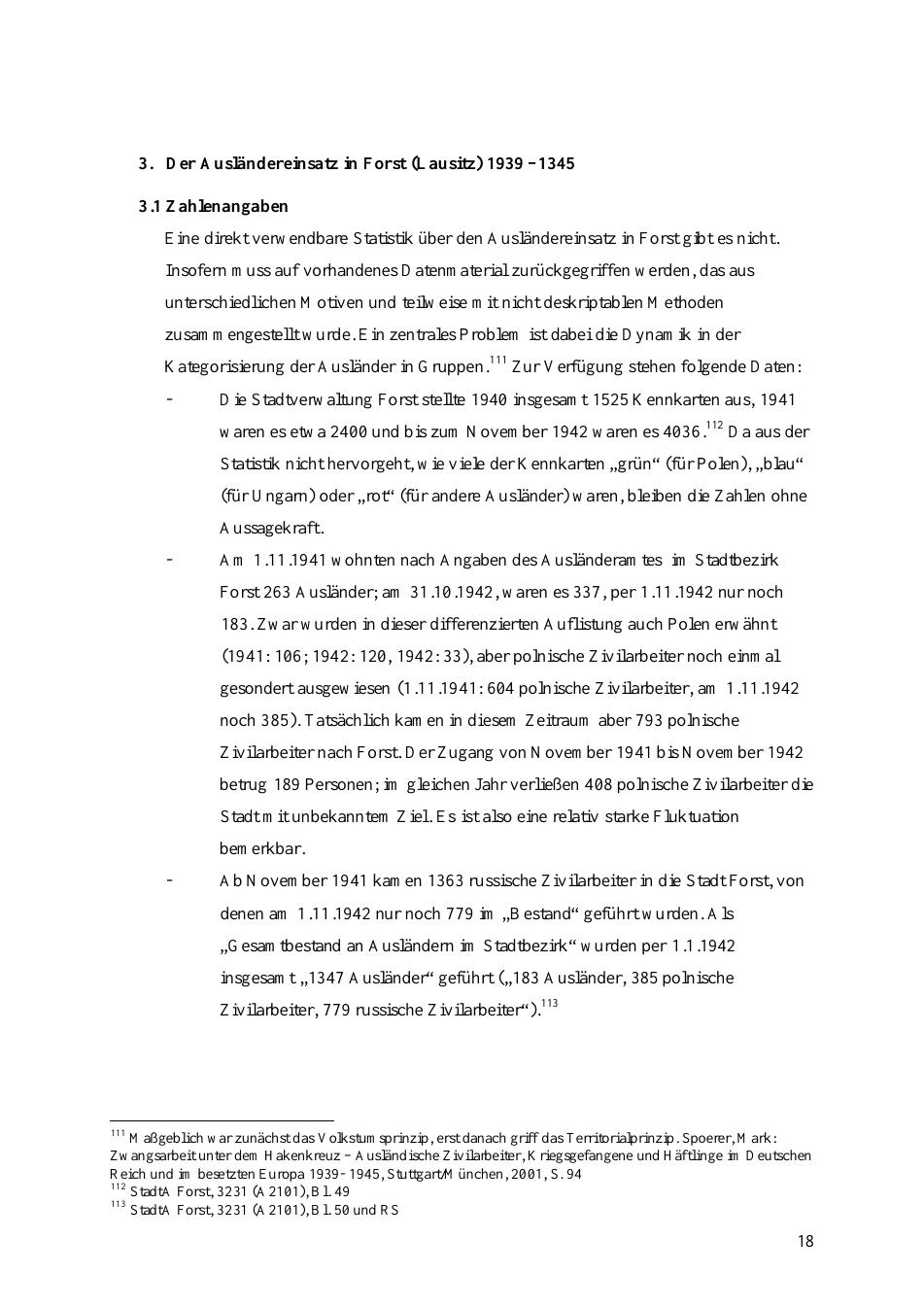
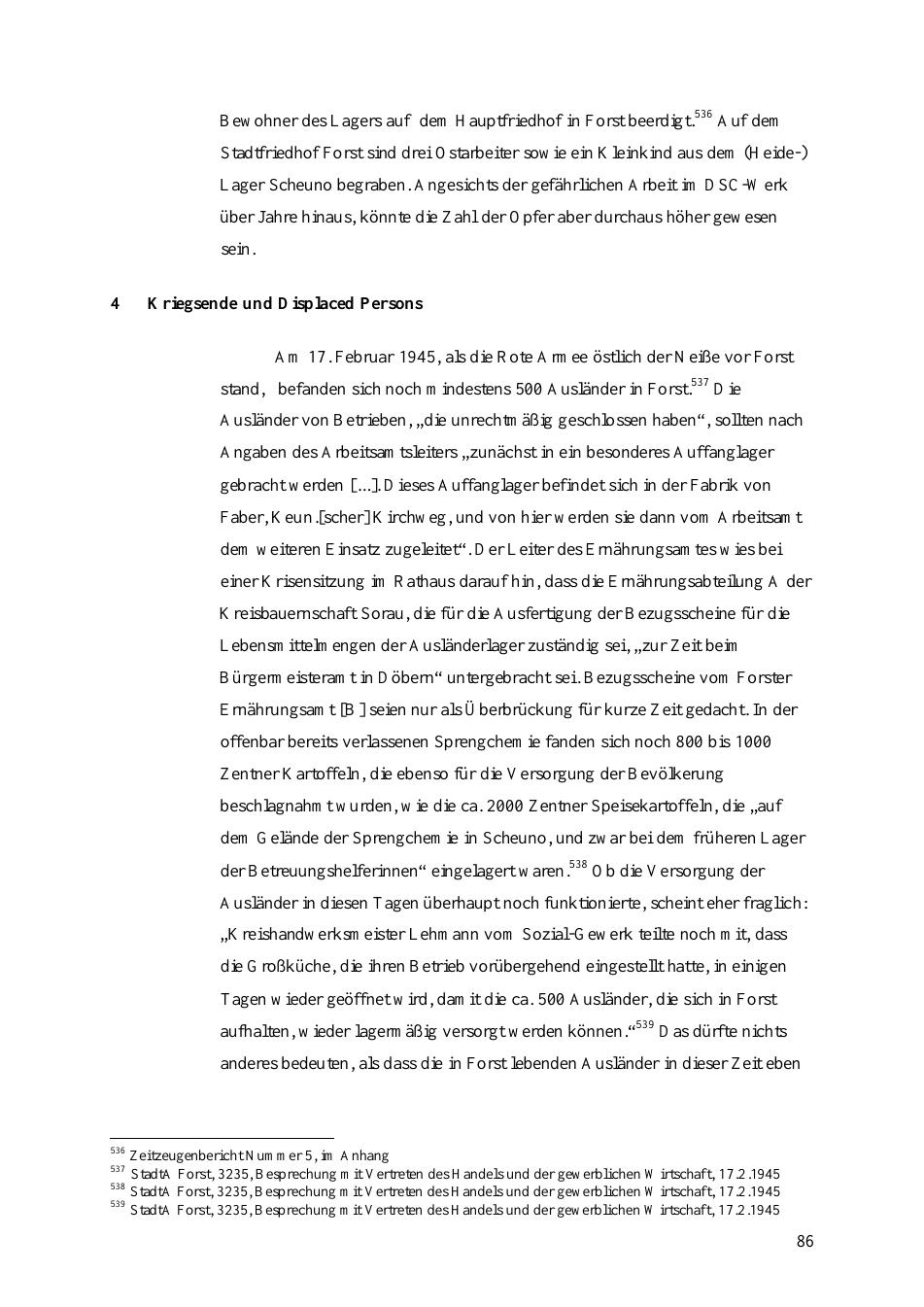
Jürgen Scholz’s study Ausländereinsatz in Forst (Lausitz) 1939–1945 identifies at least 24 accommodation sites (25 including the Jewish camp, 26 including Simmersdorf) and at least 80 businesses or institutions. A cautious estimate for the late-war period is around 2,000 foreigners. This is not a total for everyone transported through the area during the whole war.
1 November 1942
A single snapshot lists 183 “foreigners”, 385 Polish and 779 Russian civilian workers — 1,347 people. Figures from different dates and territories are not added together.
Different legal status
POWs, civilian workers, Ostarbeiter, military internees and prisoners lived under different regimes. The sources name Poles, Soviet citizens, French, Belgians, Dutch, Italians, Czechs and Jews.
Places in Forst and nearby
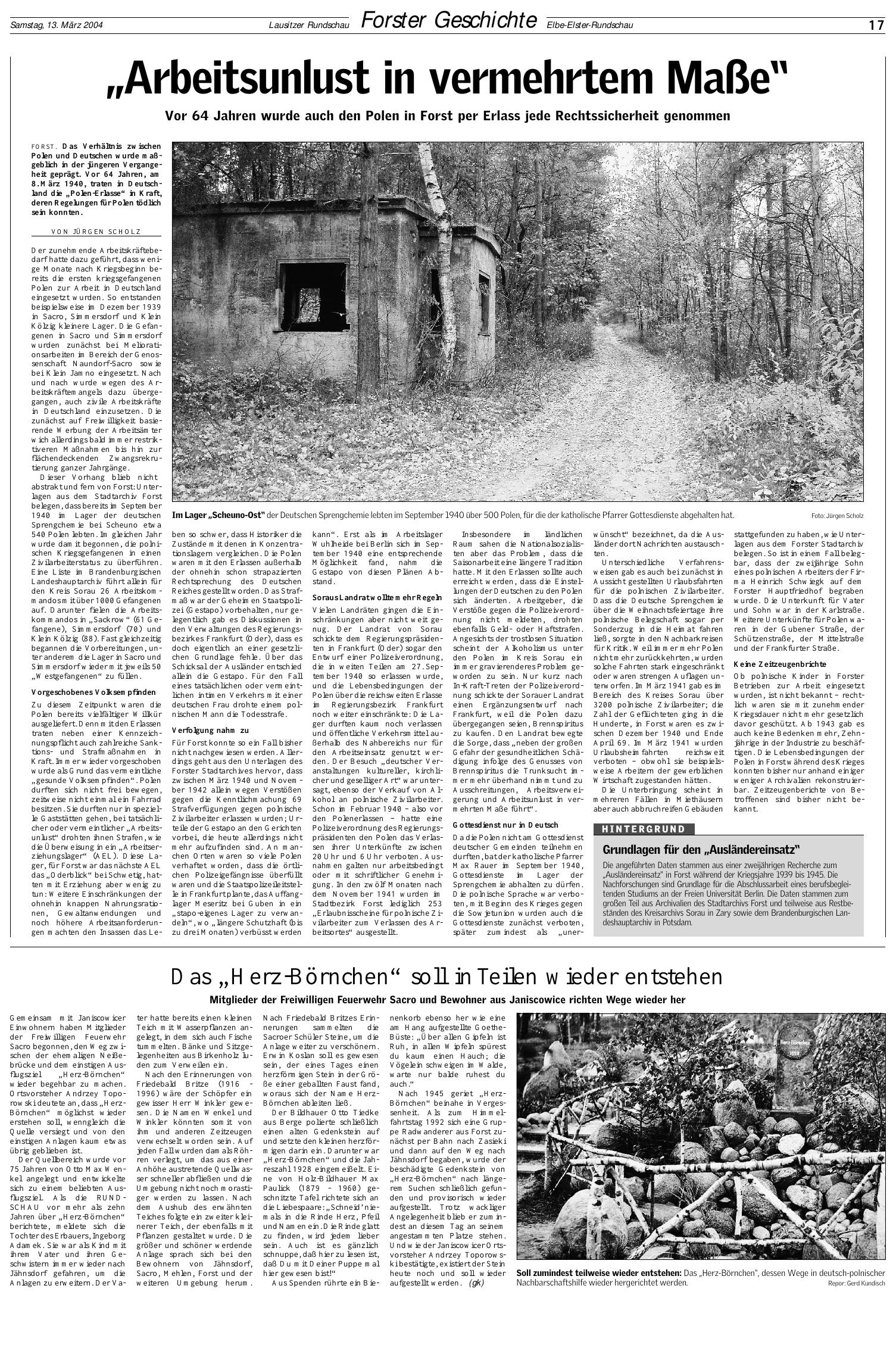
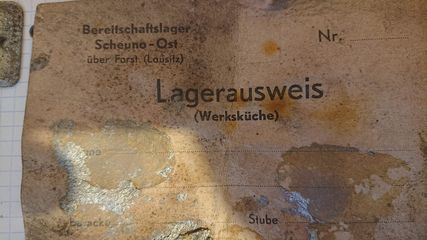
Sources name Scheuno‑Ost, Sacro (Kommando 438), Simmersdorf (Kommando 168), Hänselhalle, Mix & Genest (Kommando 930), Gut Noßdorf, Domsdorf (Kommando 863), Keune, the Noßdorf gymnasium and camps at Pförtener Straße, Muskauer Straße/Waldgürtel, Eulo, Hammer & Haebler, Rumsch & Hammer, Bahnmeisterei, Lager Speer and Windhoff. Names and responsibilities changed, so each statement must be tied to its date.
Jewish forced-labour camp at Forst/Zasieki
The Bundesarchiv/EVZ record documents a forced-labour camp for Jewish men at Forst/Zasieki for the recognised period May 1942 to March 1943. Prisoners worked at Munitionslager‑Heidelager. The catalogue gives the variant “Schönost bei Forst”; it is not automatically equated with “Scheuno‑Ost” without comparison of local records. Bundesarchiv/EVZ record →
Work connected with DSC Forst
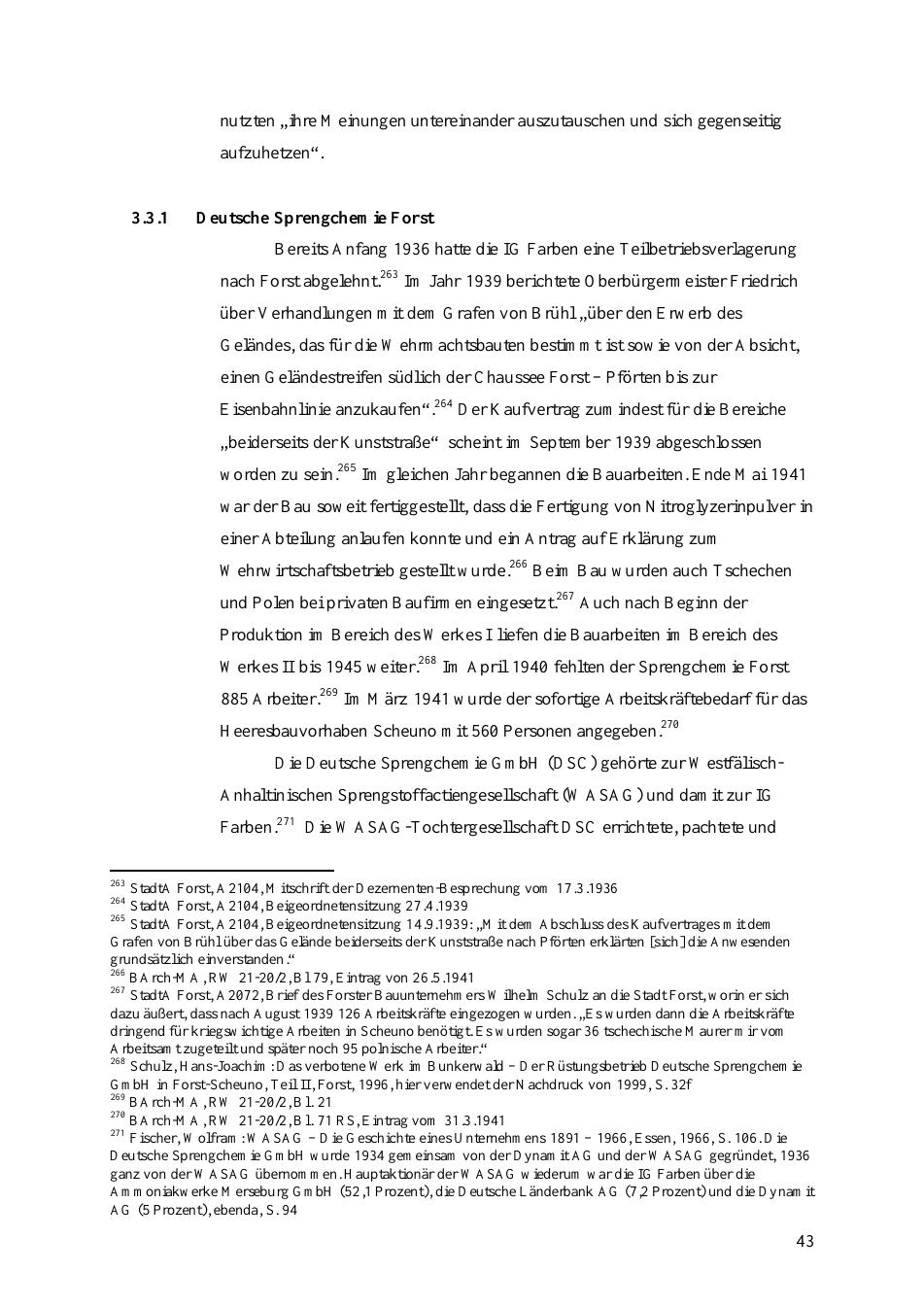
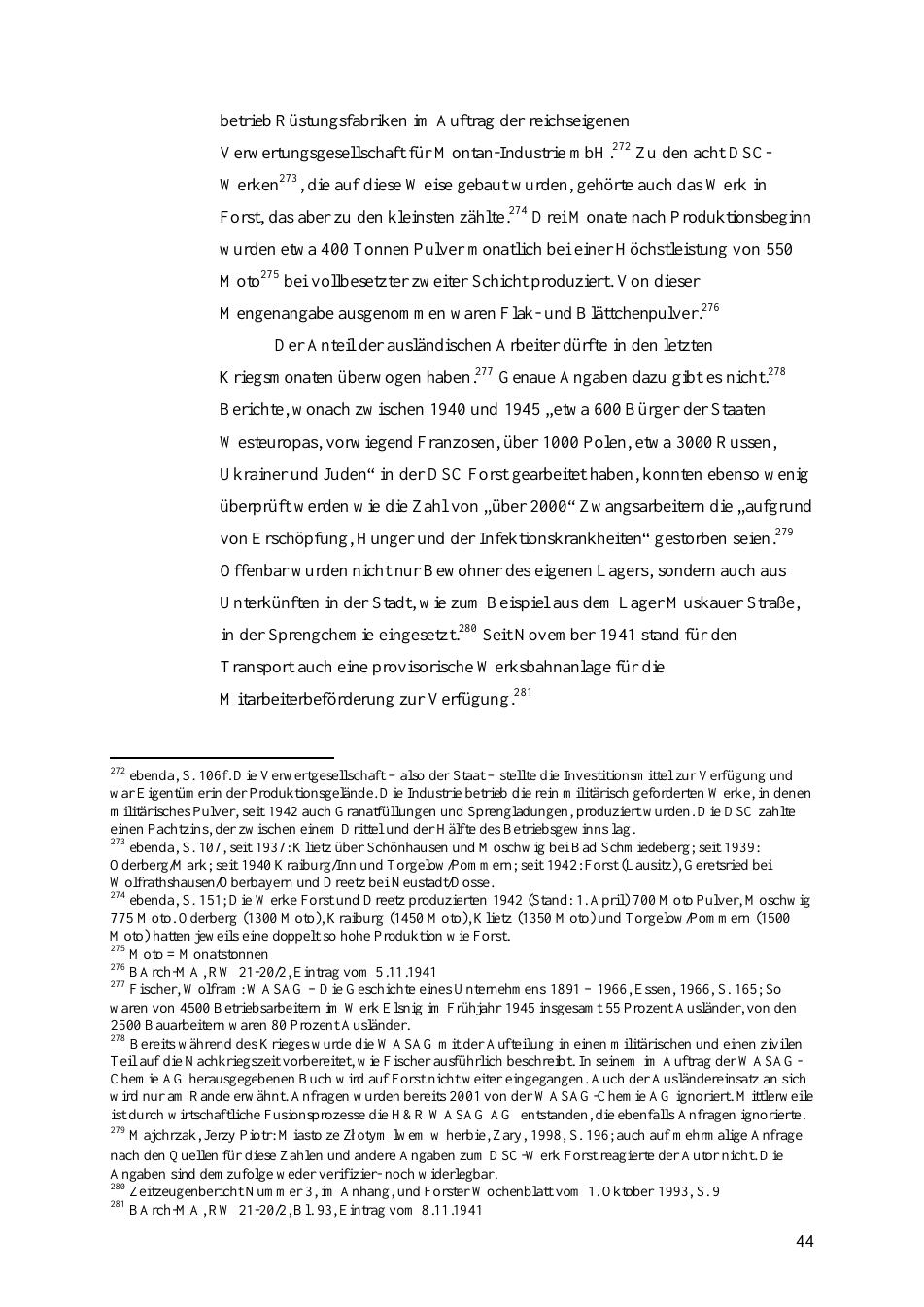
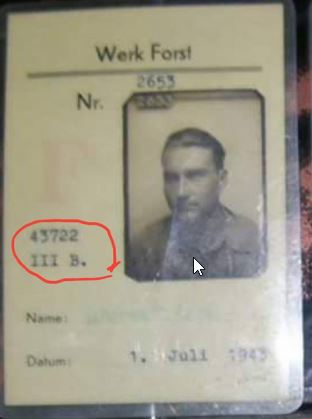
Scholz records 36 Czech bricklayers, 95 Poles and 20 POWs laying cables, as well as work in transport, water and sewer construction. French workers drove locomotives, Belgian workers operated rolling equipment, and German women and women classified as Ostarbeiterinnen cut powder strands. In March 1942, 150 Russian civilian workers arrived in Forst. No reliable complete total for the entire DSC workforce survives.
Living conditions and repression
Documents and accounts describe guarded camps, dogs, overcrowded rooms, unequal food rations, segregated medical care, child labour and Gestapo repression. Experiences differed by group and date. Scholz found 43 adult foreign burials and at least five children under four in the main cemetery register; four people had Lager Scheuno or Heidelager as their last address. They cannot all automatically be attributed to DSC.
Döbern: registers, police and penal cases
The Arolsen Archives provide Namenlisten und Schriftwechsel der Gemeinde Döbern/Niederlausitz (ref. 10008955, 1939–1945). Hierarchy 1.2.2.1 lists a Forst police report and nine units concerning penal matters involving foreigners registered in Döbern. No offence or penalty is attributed without reading the individual file. Document hierarchy →
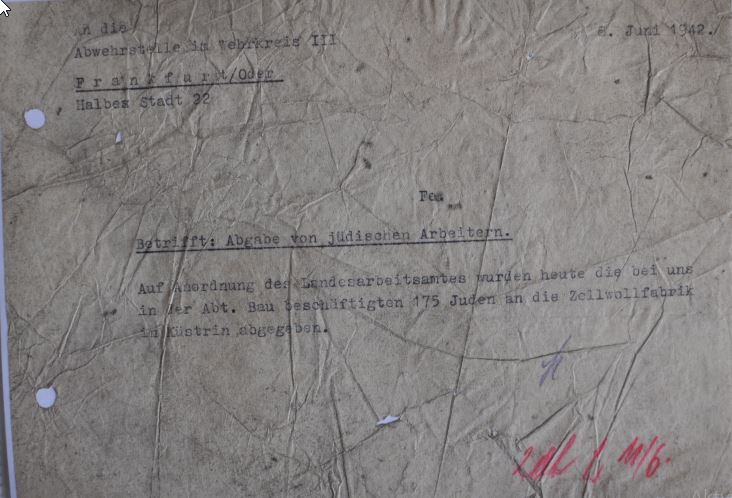
Frankfurt (Oder) letter — administrative context
Sources
- Jürgen Scholz, Ausländereinsatz in Forst (Lausitz) 1939–1945, Freie Universität Berlin, 2004.
- Arolsen Archives, ref. 10008958.
- Forced Labour 1939–1945 archive.
- bpb: terminology and categories.
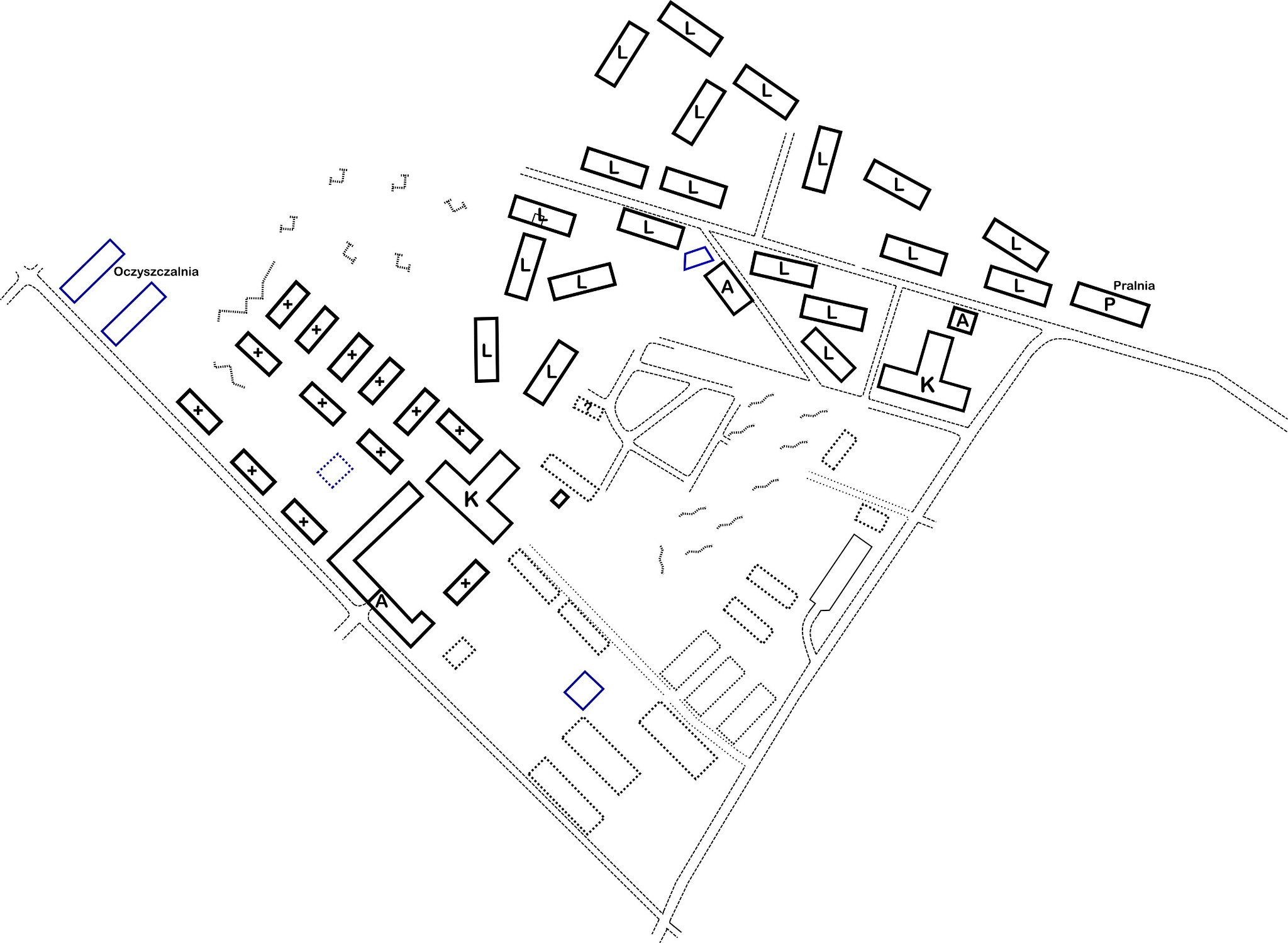
Plan of Scheuno‑Ost and the DRK nursing school
Figures with dates and geographic scope
The records count different things: identity cards issued, residents on a specific day, labour allocations and the whole Forst labour-office district. Forst issued 1,525 cards in 1940, about 2,400 in 1941 and 4,036 by November 1942. These are not simultaneous population figures. Between November 1941 and November 1942, 1,363 Russian civilian workers arrived.
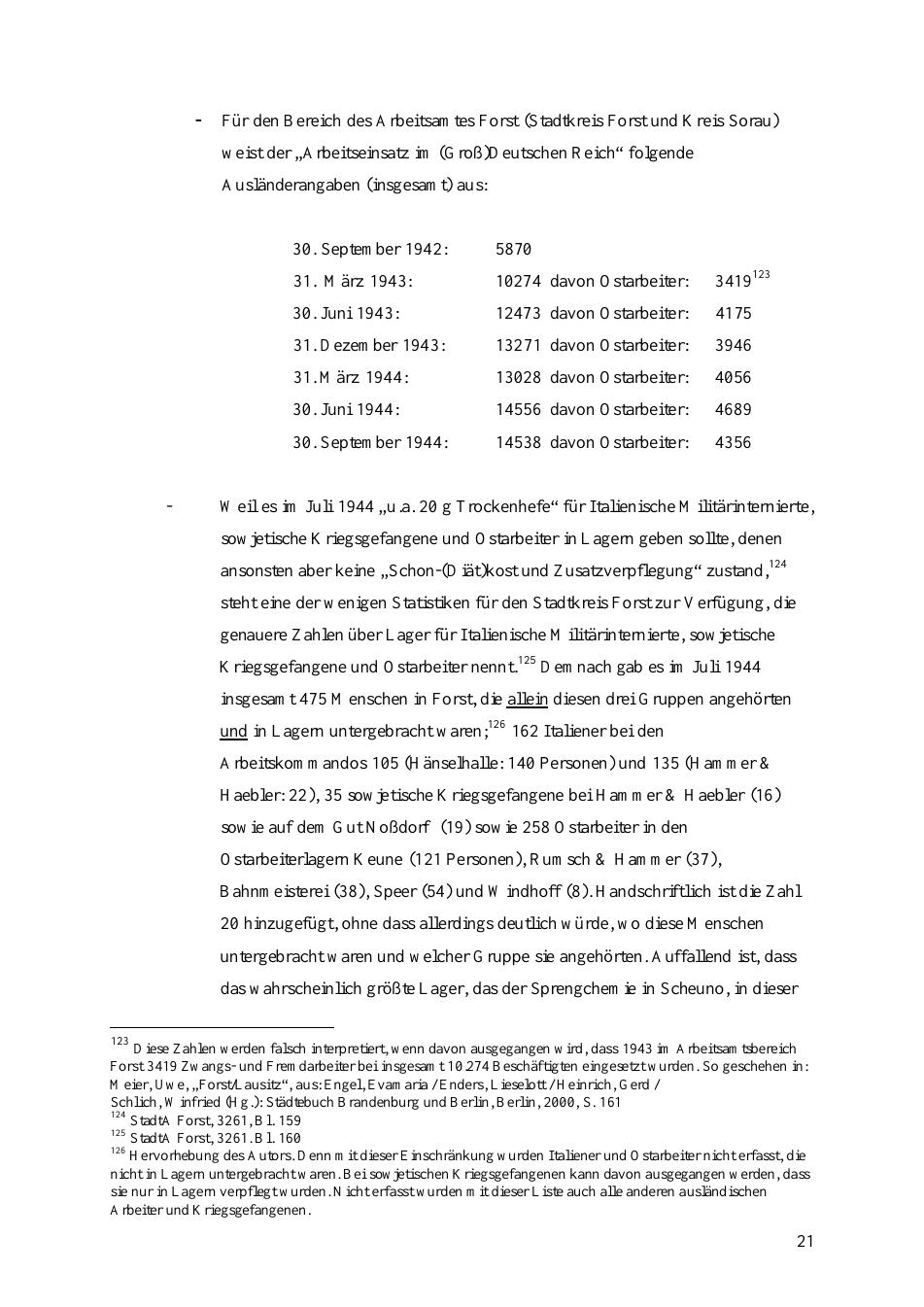
Forst labour-office district, including Kreis Sorau
| Date | Foreign workers | including Ostarbeiter |
|---|---|---|
| 30 Sep 1942 | 5,870 | — |
| 31 Mar 1943 | 10,274 | 3,419 |
| 30 Jun 1943 | 12,473 | 4,175 |
| 31 Dec 1943 | 13,271 | 3,946 |
| 30 Jun 1944 | 14,556 | 4,689 |
| 30 Sep 1944 | 14,538 | 4,356 |
These values cover the labour-office district, not the city alone, and must not be added together. Scholz’s cautious late-war estimate for Forst itself is at least around 2,000 foreign workers.
Camps, work detachments and employers
A July 1944 city list recorded 162 Italian military internees, 35 Soviet POWs and 258 Ostarbeiter. It names Hänselhalle, Hammer & Haebler, Gut Noßdorf, Keune, Rumsch & Hammer, Bahnmeisterei, Speer and Windhoff. Scheuno is absent from that snapshot, showing that it was not a complete regional inventory.
Detachment 438 at Sacro was housed in the hall of Woitke’s inn and varied from 27 to 65 men. Detachment 168 at Simmersdorf lay beside the Forst–Döbern road, right of the railway towards Jethe/Gahry. In 1940 the Sorau district planned 26 detachments for 1,079 POWs.
DSC Forst: shortages and documented tasks
DSC lacked 885 workers in April 1940; the Scheuno military construction project needed 560 immediately in March 1941. Sources record 36 Czech bricklayers, 95 Poles, 20 POWs laying cables, French workers on factory locomotives, Belgians at rolling equipment, Polish civilians on water and sewer lines and Ostarbeiterinnen cutting powder strands. In March 1942, 150 Russian civilian workers were allocated.
In October 1943 DSC sought twice-weekly medical care from the Russian physician Dr Jantschewskaja. She was arrested on 26 June 1944 and dismissed on 7 July. Milk-supplement records for hazardous work cover about 300 employees but do not fully identify their nationalities.
February 1945
At least 500 foreign workers remained in Forst on 17 February. The kitchen was temporarily closed. Authorities seized 800–1,000 hundredweight of potatoes at DSC and about 2,000 at the former Betreuungshelferinnen camp. Belgian DSC workers were forced to march towards Beeskow; Ostarbeiter were initially left without an organised evacuation.
Original documents and pages from J. Scholz’s study