
1994 and 1995 - two documents in the same research reconstruction
For project purposes the two works are treated as closely equivalent in their technical reconstruction, but they remain separate bibliographic items. Johannes Gutenberg University Mainz officially lists the unpublished Preuß et al. study from 1994: 141 pages, 38 tables, 12 figures, 36 building descriptions and a 1:5,000 plan. The G.E.O.S. expert report completed on 30 November 1995 brings together archival evidence, site reconstruction, technical systems and environmental questions.
Primary source · G.E.O.S. 1995
“Expert report ... ammunition and explosives factory Forst”, Berlin/Hennigsdorf, 30.11.1995; especially sections 3.2.2 and 4.1-4.5 and tables 5, 7, 12-18.
The scan is not embedded as page imagery. It is provided only as a source PDF.Scale of the works
The 3.364 million m² figure need not include every protection strip, forest buffer and auxiliary area. Earlier project materials quoted 500-600 ha, but the current public view of archive group 89/1299/0 does not display those figures. They are therefore not presented here as currently verified archive data.
Construction material, 1939-1941
These are summed planning figures from half-yearly schedules, not a complete final account of all material actually installed.
About 70 km of roads and an extensive works railway
G.E.O.S. describes roughly 70 km of internal roads, mainly made from concrete slabs. The often-quoted c. 38 km railway network is explicitly associated with witness statements and reconstruction rather than a complete surviving track register. The functional system included the WÜST wagon-transfer station, workshop and locomotive shed, weighing equipment, loading ramps and tanker handling.
28 wells and separate wastewater streams
Water supply, cooling, boiler houses, laboratories, social facilities and chemical departments were not handled as one simple flow. This is why former channels, settling structures and infiltration areas became central to the 1990s site investigations.
Two energy complexes - and fuel shortages
| Fuel | Monthly need | Allocation | Shortfall |
|---|---|---|---|
| Hard coal | 4,000 t | 2,665 t | 1,335 t |
| Lignite | 300 t | 280 t | 20 t |
| Coke | 250 t | 106 t | 144 t |
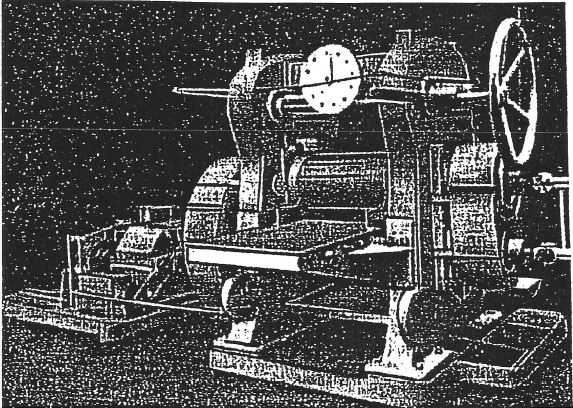
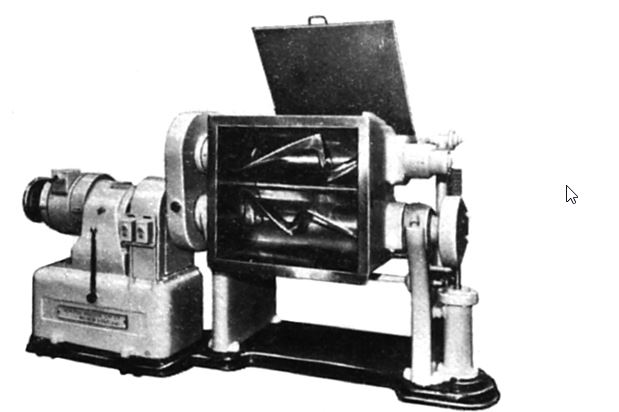
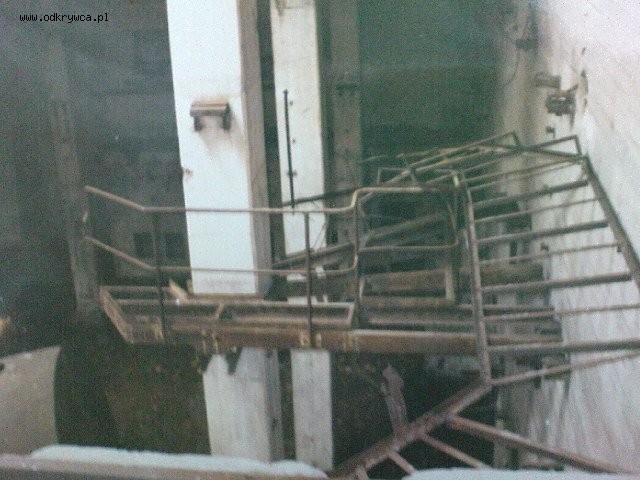
Not one hall, but many separated zones
The description is technical-history, not a manufacturing guide: no recipes, mixing ratios, temperatures, times or operating parameters are published.
38,526 tonnes in the surviving production summary
| Period | Total | Monthly average |
|---|---|---|
| 1941/1942 | 3 299,7 t | 275 t/mies. |
| 1942/1943 | 8 758,0 t | 729,8 t/mies. |
| 1943/1944 | 13 667,0 t | 1 138,9 t/mies. |
| IV-VIII 1944 | 6 523,0 t | 1 304,6 t/mies. |
| IX 1944-I 1945 | 6 268,0 t | 1 253,6 t/mies. |
The highest monthly average in the surviving series is about 1,304.6 tonnes for April-August 1944.
What online records now verify
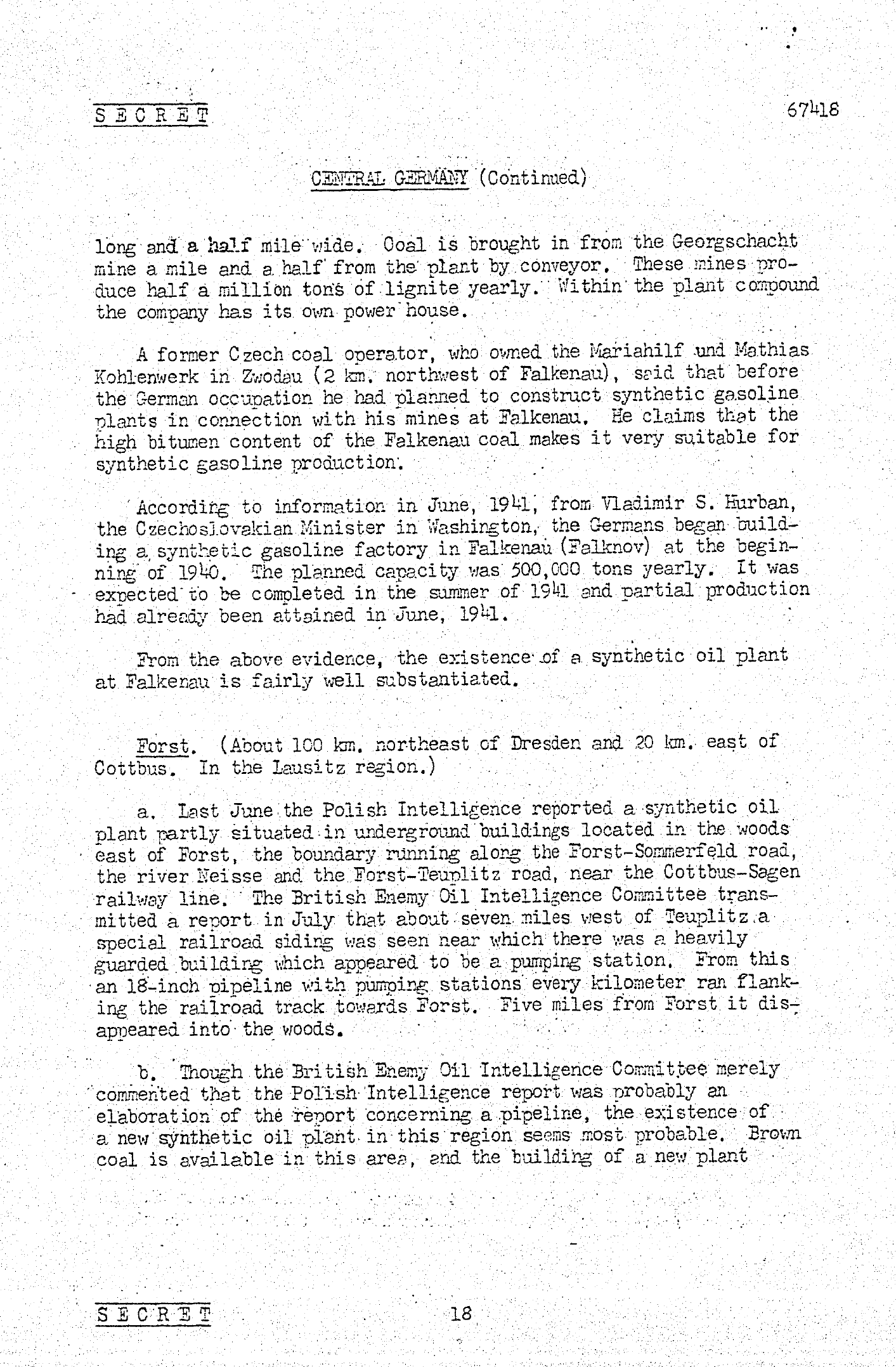
JGU Mainz confirms the 1994 Forst study. Bundesarchiv record BArch R 8135/7252 lists Forst among Deutsche Sprengchemie's branch works. A 1942 BLHA record documents a conviction for refusal to work at DSC Forst-Scheuno and links further Scheuno files. The State Archive in Zielona Góra lists group 89/1299/0 with 67 files; the current public description says the holdings consist only of worker passes. LfU Brandenburg confirms systematic Rüstungsaltlasten recording in 1991-1995 as the wider institutional context.
Sources
- G.E.O.S. Ingenieurgesellschaft mbH, Forst expert report, 30.11.1995.
- Preuß et al. (1994), Forst reconstruction. JGU Mainz.
- State Archive in Zielona Góra, 89/1299/0. Szukaj w Archiwach.
- Bundesarchiv / DDB, BArch R 8135/7252. DDB.
- BLHA / DDB, 29 LGgef Guben 245. DDB.
- LfU Brandenburg, Rüstungsaltlasten. LfU.